Yellow Bird: A Cheerful, Practical Embroidery Design Review
First Impressions: Whimsy That Stitches Well
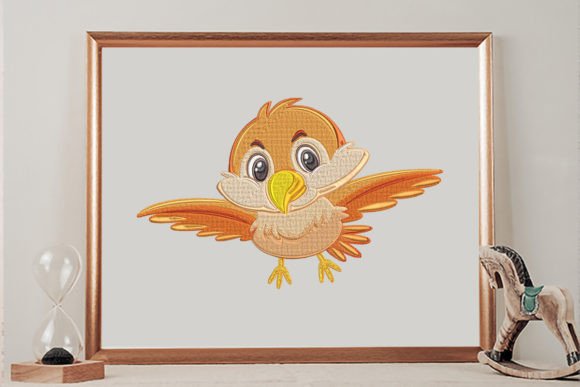
When I opened the Yellow Bird embroidery file for the first time, what struck me wasn’t just its brightness—but its quiet confidence. This isn’t a design shouting for attention; it’s a small, well-proportioned bird with gentle curves, open posture, and subtle visual rhythm. The shape reads clearly at 3–4 inches wide, making it ideal for a machine embroidery design that needs to land softly but memorably. It leans into charm without tipping into cutesy overload—exactly the kind of balance that holds up across customer-facing products like baby onesies, linen tea towels, or minimalist tote bags.
A Real-World Test: Stitching It on a Linen Kitchen Towel
Last week, I used Yellow Bird on a natural linen kitchen towel for a local boutique’s spring collection. Why linen? Because it’s unforgiving—loose weave, minimal stretch, and zero tolerance for poor stitch density or unstable underlay. I paired it with medium-weight cutaway stabilizer and 40-weight cotton thread in sunny yellow, olive green (for the leafy stem), and soft charcoal (for the eye). The result? Crisp satin-stitched edges, clean fill-stitch body, and no puckering—even where the bird’s wing curved slightly over the towel’s hem. That told me Yellow Bird has thoughtful underlay and moderate stitch density—not too sparse to look thin, not so dense it overwhelms lightweight fabric.
Where It Shines—and Where It Needs Thought
Yellow Bird excels in applications where clarity, warmth, and handmade sincerity matter:
- Custom apparel: Works beautifully on crewneck sweatshirts (left chest placement), relaxed-fit tees, and unstructured caps—especially when stitched with matte thread for texture contrast.
- Baby embroidery: Its rounded silhouette and lack of fine linework make it safer and more durable than intricate bird designs on onesies or burp cloths.
- Embroidered patch: Clean outlines and contained size mean it converts well to iron-on or sew-on patches for denim jackets or backpacks.
- Holiday embroidery: Paired with a simple red berry sprig or stitched onto a neutral wool blend stocking, it reads as joyful—not seasonal—so it stays relevant year-round.
- Etsy seller & small shop product: As a digital embroidery file, it’s versatile enough to support multiple mockups (tote, pillow cover, apron) without needing redesign—saving real production time.
But it’s not universally plug-and-play. Use caution on:
- Stretchy fabrics like jersey knits—unless you add light tear-away + topping, since the bird’s smooth curves can distort if the base fabric shifts mid-stitch.
- Dark or heavily textured fabrics—the cheerful yellow loses impact on black terry cloth or bouclé wool unless you boost thread contrast (e.g., lemon yellow on navy, not pale butter).
- Tiny hoop sizes under 4”—some delicate tail feather detail may compress or blur below 2.75”. Always check the smallest recommended hoop size before digitizing down.
- Layered garments like hoodies with thick pockets—the design sits best on flat, single-layer surfaces unless you’re willing to float stabilizer.
What It Does for Your Craft Business—Beyond Aesthetics
As someone who’s helped dozens of Etsy sellers refine their embroidery offerings, I’ll say this plainly: Yellow Bird elevates perceived value without demanding premium pricing. Customers recognize “handmade thoughtfulness” in its proportions—no awkwardly stretched limbs, no overcrowded negative space. That builds trust. When someone orders a personalized gift—a baby’s first embroidered blanket or a custom apron for a baker—they’re not just buying thread and fabric. They’re buying intention. And Yellow Bird delivers that quietly.
It also supports brand consistency. Whether you’re stitching it solo in your home studio or scaling across a small batch of boutique merchandise, the design retains its voice. No need to tweak spacing or simplify shapes for different substrates—it’s built with versatility in mind. And because it avoids excessive detail, it photographs well in printable mockups, which matters for digital listings where first impressions happen in thumbnails.
Practical Designer Notes Before You Stitch
Before committing Yellow Bird to your next embroidery project, run these checks:
- Test on scrap fabric—especially if using textured, dark, or stretchy materials. Watch how the beak and eye hold up.
- Review thread colors in natural light. Yellow thread varies wildly—opt for high-quality, colorfast options to avoid fading after washing.
- Inspect stitch density in the body and wing. Too dense = stiff fabric; too light = translucent coverage. Adjust if needed—but only after testing.
- Confirm hoop size compatibility with your machine and intended product. Not all “small bird” designs fit standard cap hoops.
- Try black-and-white mockups. If the shape reads strongly in grayscale, it’ll translate across diverse fabric backgrounds.
- Use appropriate stabilizer: cutaway for knits, tear-away for stable wovens, and topping for napped or fuzzy fabrics.
- Verify licensing before selling finished items or bundling the digital embroidery file—especially if marketing as a craft business asset or Etsy seller resource.
Final Thought: A Design That Grows With You
Yellow Bird isn’t flashy—but it’s reliable. It works for the hobbyist stitching her first pillow cover, the apparel decorator building a small shop’s signature motif, and the Etsy seller curating a cohesive line of nursery decor. It doesn’t ask for special treatment, yet rewards attention to detail. In a market flooded with overly complex or trend-chasing birds embroidery, this one feels like a quiet reminder: sometimes the most effective embroidery design is the one that simply *belongs*—on fabric, on product, and in the hands of the maker.