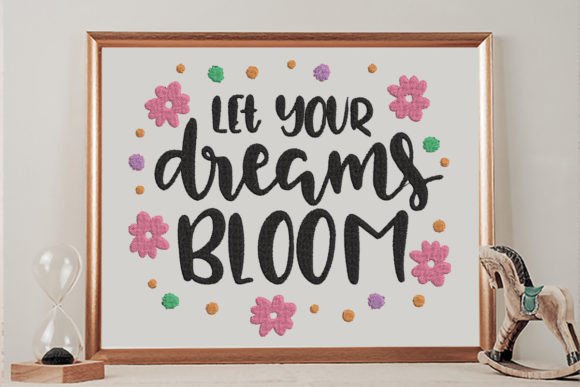
Let Your Dreams Bloom
First Impression: Soft, Uplifting, and Booth-Ready
As an embroidery designer who’s prepped over 200 craft fair booths—and watched what stops shoppers mid-aisle—I immediately felt Let Your Dreams Bloom land with quiet confidence. It’s not loud or trendy in a fleeting way. It’s soft, gently modern, and unmistakably Inspirational. Think warm linen tea towels, minimalist pillow covers, and delicate apron hems—not neon festival totes or sarcastic coffee mugs. The title alone invites pause. Customers don’t just scan it; they *lean in*. That’s gold at a handmade market where attention spans are measured in seconds.
Where It Shines: Real Craft Fair Product Pairings
Let Your Dreams Bloom isn’t one-size-fits-all—it’s *right-size-for-the-right-product*. Here’s how it performs across your most reliable small shop items:
- Tote bag design: Perfect as a centered chest motif (not oversized). Reads clearly from 3 feet away—no squinting needed. Works best on natural canvas or medium-weight cotton, not stiff coated fabrics.
- Apron embroidery: Ideal above the pocket or along the waistband curve. Its gentle rhythm complements the handmade flow of a kitchen or studio apron—never competes with function.
- Tea towel embroidery: A standout. On flour-sack or waffle-weave towels, the phrase breathes with the fabric texture. Avoid overly dense stitch areas near seams—test first.
- Embroidered patch: Highly adaptable. Trim cleanly, iron-on or sew-on, and it adds instant charm to denim jackets, kids’ backpacks, or boutique gift tags.
- Pillow cover & pouch embroidery: Strong focal point at 4–5 inches wide. Gives small handmade products emotional weight—turning a $28 pillow into a “gift-with-meaning” item.
- Caps & curved surfaces: Proceed with caution. Lettering must be simplified or resized upward—tiny stems or fine loops may distort on structured caps without expert digitizing.
What Makes It Sell: Clarity, Charm, and Consistency
This machine embroidery design earns its place in your booth because it’s instantly legible, emotionally resonant, and brand-flexible. It doesn’t scream “handmade”—it whispers “thoughtfully made.” That subtlety builds trust. Buyers associate Let Your Dreams Bloom with care, intention, and quiet confidence—not gimmicks. When styled across 3–4 product types (e.g., matching tea towel + pouch + pillow), it strengthens your booth’s visual cohesion and tells a story your customers remember.
For Etsy sellers and digital embroidery file shops, this design photographs beautifully—especially flat-lay mockups on raw wood or marble. It translates well to printable mockups for listings, and its balanced composition avoids awkward cropping. As a small shop product, it feels repeatable: batch-stitch 20 tea towels without fatigue or inconsistency, provided your hoop size and stabilizer match the fabric weight.
Careful-Use Notes: Protect Your Production & Reputation
Even lovely designs need smart execution. Here’s what to watch for with Let Your Dreams Bloom:
- Dense stitch areas: If floral elements or trailing vines are part of the design, confirm stitch density isn’t excessive—dense fills can pucker thin fabrics or overwhelm textured towels.
- Tiny details & small lettering: Test readability at 3 inches wide. Delicate serifs or tight kerning may blur on dark fabric or low-thread-count cotton.
- Fabric texture matters: Waffle-weave, terry cloth, and thick denim demand stronger stabilizer—and possibly reduced top thread tension. Don’t assume the same settings work across all materials.
- Dark fabric contrast: Light thread on black or navy can fade visually unless you use high-sheen rayon or metallic accents. Always test thread colors on your actual fabric swatches.
- Curved surfaces: Caps, mugs (for embroidered sleeves), and rounded pouches require re-hooping or specialty hoops. If your digitizing doesn’t include underlay adjustments, clarity will suffer.
Designer-to-Designer Production Checklist
Before cutting your first production run, do this—every time:
- Test the embroidery file on scrap fabric matching your final product (same weight, weave, and dye lot).
- Check thread contrast in natural light—not just under your machine lamp.
- Review spacing between words and decorative elements: Does it breathe? Or feel cramped?
- Confirm hoop size compatibility—especially if stitching on narrow apron straps or small pouch flaps.
- Inspect stitch density: Look for thread buildup, skipped stitches, or puckering in floral motifs.
- Use the right stabilizer—tear-away for stable cottons, cut-away for knits or stretchy blends.
- Create at least one real mockup: Stitch it, press it, photograph it, hold it in your hand. Does it feel like a finished product—or a prototype?
- Compare fabric colors side-by-side: Ivory thread on oatmeal linen reads differently than on cream cotton. Small shifts change mood.
- Confirm commercial licensing terms—this is essential for any commercial embroidery or handmade product you sell. Don’t assume personal-use = small-business-use.
Final Thought: More Than a Phrase—It’s a Vibe You Can Sell
Let Your Dreams Bloom works because it meets buyers where they are: seeking meaning, beauty, and authenticity in everyday objects. It doesn’t shout. It settles in. At a craft fair, that’s how you earn repeat customers, Instagram tags, and heartfelt thank-you notes. Whether you’re an Etsy seller building a signature collection, a boutique maker curating seasonal gifts, or a Cricut crafter expanding into machine embroidery, this embroidery design delivers emotional resonance without sacrificing practicality. Just remember: the magic isn’t just in the file—it’s in how thoughtfully you bring Let Your Dreams Bloom to life, stitch by intentional stitch.