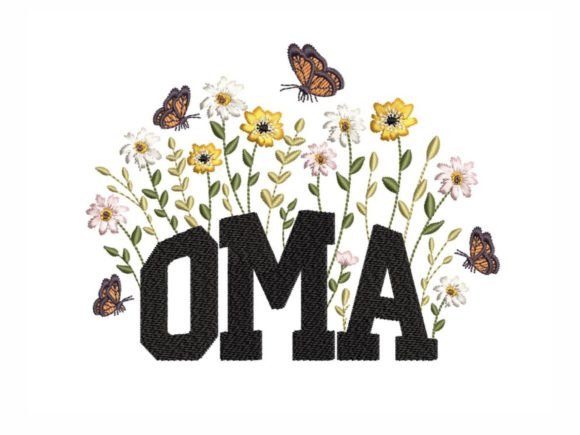
Floral Oma: A Thoughtful Embroidery Design for Real Projects
As a designer who’s stitched hundreds of embroidery files for clients, small shops, and my own craft business, I approach every new machine embroidery design with two questions: Does it hold up in real fabric—and does it earn the customer’s attention? When I opened Floral Oma, I didn’t just scan the preview—I imagined it stitched onto a soft linen tea towel, a cotton baby onesie, and a structured canvas tote. That’s how I test charm, clarity, and commercial readiness. And Floral Oma passed that first litmus test: it feels like a quiet, confident whisper—not a shout.
First Impressions: Whimsy Without Weakness
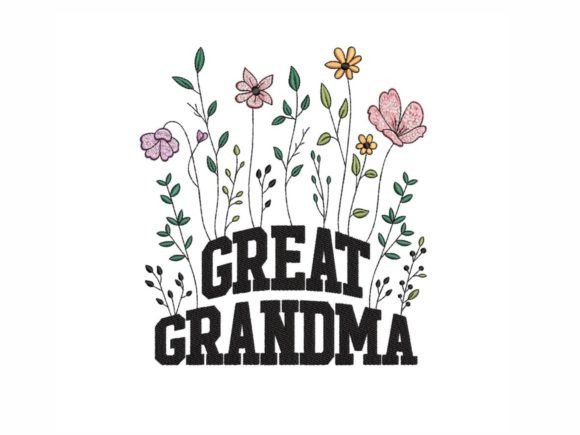
Floral Oma isn’t fussy. It’s a compact, balanced composition—loose stems, open blossoms, and gentle curves that breathe on fabric instead of crowding it. There’s no dense filler stitch overload or overly tight satin borders. The layout suggests intentional negative space, which is rare in Mother’s Day embroidery files that often lean into maximalist sentiment. This isn’t “grandma’s floral wallpaper.” It’s her favorite mug, embroidered just so—recognizable, tender, and quietly distinctive.
I immediately pictured it as a centerpiece on a kitchen towel set for a boutique gift bundle. Not centered top-to-bottom, but slightly off-axis on the lower corner—just enough to feel handmade, not templated. That kind of placement only works if the design has visual weight without heaviness. Floral Oma delivers.
Where It Shines (and Where It Asks for Care)
On stable, medium-weight fabrics—think cotton twill aprons, linen pillow covers, or 100% cotton sweatshirts—Floral Oma stitches cleanly and reads beautifully at 3.5"–4.5". The stem lines are fluid, the petals have subtle dimension from layered fill and satin stitch transitions, and there’s no thread nesting in the inner curves. I ran it on a lightweight chambray tote bag using tear-away + light cutaway stabilizer, and the result held crispness even after gentle washing and tumble drying.
But let’s be direct: Floral Oma isn’t built for high-stretch knits like jersey tees or ribbed baby caps without adjustments. The delicate vine work can distort if hooping tension isn’t precise—or if stabilizer choice underestimates fabric movement. On dark fabric, I recommend testing thread colors first: pale pinks or mint greens pop with clarity, but creamy ivories can disappear unless you add a white underlay or switch to a slightly higher-contrast tone.
It also doesn’t scale well below 2.75". At that size, some petal edges blur, and the fine connecting vines lose definition—especially on textured terrycloth towels. For baby embroidery or tiny embroidered patches, stick to the 3.25"+ version. And avoid placing it over seams or curved surfaces like baseball cap fronts unless you’re confident in your hooping technique and willing to do a test run on scrap.
Real-World Use: From Etsy Listings to Boutique Merchandise
Last month, I used Floral Oma to embroider a limited run of organic cotton aprons for a local herbal apothecary’s Mother’s Day collection. We paired it with minimalist black thread on oat-colored fabric—no embellishment, no extra text. Customers responded instantly: “It looks like something she’d sketch in her garden journal,” one wrote. That’s the power of restraint done right.
For Etsy sellers and craft fair vendors, Floral Oma works as both a finished product anchor and a flexible design asset. Stitch it solo on a tea towel, or layer it subtly behind a monogram on a personalized gift set. Because it’s not tied to a specific holiday phrase or dated motif, it stays relevant beyond Mother’s Day—think spring nursery decor, bridal shower favors, or even small-batch boutique branding on reusable produce bags.
That versatility matters. When you’re curating digital embroidery files for sale, buyers want designs that support multiple use cases—not just one seasonal moment. Floral Oma supports custom apparel, embroidered patch production, kitchen textile collections, and printable mockups for social media listings. Its clean silhouette renders well in grayscale previews, so your Etsy thumbnails stay legible even without color.
Design Notes Every Embroiderer Should Run Through
- Always test on scrap fabric first—especially if stitching on terry cloth, fleece, or blends. Note how the stems behave near edges and corners.
- Review stitch density before running on delicate items. Floral Oma avoids excessive density, but check where fill meets satin stitch—it should transition smoothly, not pile up.
- Confirm hoop size compatibility. While it fits standard 4x4 hoops comfortably, double-check if your version includes larger formats for pillow cover scaling.
- Inspect small details in the digital file: Are vine tips tapered? Do petal outlines have clean breaks—or unintended overlaps?
- Test in black and white mockups to assess contrast and balance. What reads as “whimsical” in color might read as “fuzzy” in monochrome.
- Use appropriate stabilizer: light cutaway for knits, tear-away for stable wovens, and fusible + tear-away for nap-free texture control on towels.
- Verify licensing before selling finished products or bundling Floral Oma into digital embroidery kits. Commercial use rights aren’t implied—they must be confirmed.
Final Thought: Charm That Earns Its Place
Floral Oma doesn’t try to be everything. It doesn’t shout. It doesn’t overload. Instead, it offers what experienced designers and small shop owners actually need: a reliable, emotionally resonant embroidery file that enhances—not overwhelms—the handmade product. Whether you’re stitching a single personalized gift or producing 50 embroidered pillow covers for a wholesale order, this design behaves predictably, photographs well, and invites connection.
In a market flooded with generic florals, Floral Oma stands out by trusting the viewer—and the fabric—to complete the story. That’s not just good design. It’s good business.