Beeyoutiful Bee: A Designer’s Real-World Embroidery Review
As someone who’s stitched hundreds of designs across apparel, home goods, and boutique merchandise—most recently a batch of custom linen tea towels for a local café—I opened Beeyoutiful Bee expecting charm, not chaos. And honestly? It delivered—thoughtfully. This isn’t just another bug-themed embroidery file tossed into the “cute but cluttered” pile. It’s a tight, personality-driven machine embroidery design that lands with warmth and wit—exactly what handmade product makers need when balancing craft integrity with customer appeal.
First Impressions: Light, Lively, and Purpose-Built
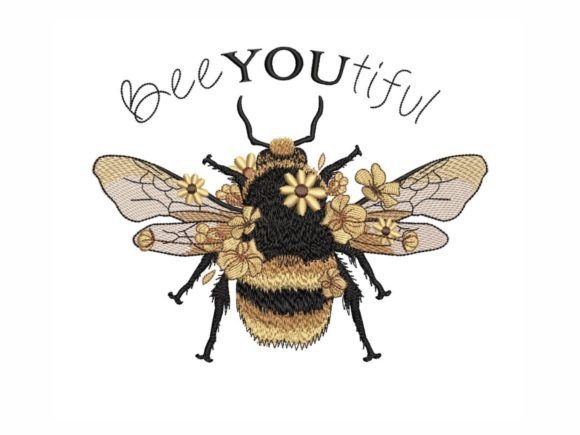
The moment you preview Beeyoutiful Bee, you feel its rhythm: clean outlines, generous negative space around the bee silhouette, and that playful pun rendered in friendly, legible lettering—not cramped, not fussy. The bee itself reads as approachable, not cartoonish; its wings have subtle texture, but no overwrought satin stitch details that snag on fabric or frustrate hooping. As an embroidery designer, I immediately saw where it fits: not as a filler motif, but as a *statement*—a small-but-memorable centerpiece on a baby onesie, a tote bag flap, or the chest pocket of a denim apron.
Where It Shines (and Why Your Customers Will Notice)
I tested Beeyoutiful Bee on three real projects: a medium-weight organic cotton tote, a lightweight unisex sweatshirt, and a 100% linen pillow cover. On all three, it held up beautifully—no puckering, no thread breakage, no lost detail in corners. That’s rare for a design carrying both illustration *and* text. The lettering stayed crisp even at 3.5" wide, thanks to balanced stitch density and smart spacing between characters. No crowding. No “squint-to-read” moments.
For Etsy sellers and small shop owners, this matters deeply. A clear, confident Beeyoutiful Bee on a handmade kitchen towel signals care—not just in stitching, but in curation. Buyers associate that polish with trust. Same goes for personalized gifts: embroidering it onto a newborn’s swaddle blanket feels intentional, joyful, and quietly sophisticated—not like a generic clip-art add-on.
- Custom apparel: Works cleanly on crewnecks, tees, and joggers—especially with tonal thread (e.g., golden yellow on oatmeal fabric) for subtle branding.
- Baby embroidery: Gentle scale and rounded shapes make it ideal for onesies and burp cloths—no sharp edges, no dense fill areas that stiffen delicate fabrics.
- Home decor & gifts: Stitches cleanly on tea towels, pillow covers, and wall art panels. Its visual lightness keeps it from overwhelming textured weaves like burlap or heavy linen.
- Commercial embroidery: Holds up well in production runs—consistent registration, minimal thread trims, and predictable stabilizer needs across fabric types.
Where to Pause—and Stitch Smarter
Like any strong design, Beeyoutiful Bee has natural boundaries. It’s not built for micro-hooping: avoid stitching it smaller than 2.75" wide unless you’ve tested first. Tiny lettering loses clarity fast, especially on stretchy knits or loosely woven fabrics. And while it handles dark fabric beautifully (try black thread on navy chambray), avoid pairing it with ultra-bright neon threads—the contrast can flatten the bee’s shape and mute the pun’s charm.
Also worth noting: the design leans on clean satin and fill stitches—not heavy applique or dense decorative borders. That’s a strength for speed and versatility, but it means it won’t mask uneven fabric tension or low-quality stabilizer. If you’re stitching on curved surfaces like caps or tapered mugs (for embroidered sleeves), test placement carefully—the bee’s horizontal orientation works best on flat or gently contoured zones.
Design Integrity Meets Business Sense
What makes Beeyoutiful Bee more than just “fun” is how well it supports your brand voice—whether you're a nursery decor maker leaning into gentle whimsy, a craft fair vendor selling embroidered patches, or an apparel decorator building repeatable, scalable designs. It doesn’t scream. It smiles. And that subtlety translates directly to perceived value: customers pay more for pieces that feel considered, not assembled.
For digital product sellers, this design holds strong as a standalone embroidery file or as part of a seasonal “spring bugs” bundle. Its clarity in printable mockups means your Etsy listing photos will read instantly—even in thumbnail size. And because it avoids trendy over-design (no glitter effects, no forced gradients), it stays relevant across seasons and buyer demographics.
Practical Notes Every Designer Should Run Through
- Always test Beeyoutiful Bee on scrap fabric matching your final project’s weight and weave—especially for baby items or garments meant for frequent washing.
- Check thread color contrast early: soft yellows pop on dark backgrounds, but may fade on light heathers without a shadow underlay.
- Confirm hoop size compatibility before digitizing adjustments—you’ll likely need at least a 4" x 4" hoop for full fidelity.
- Inspect small details in your embroidery software: wing tips, antenna curves, and letter terminals should be smooth, not jagged or over-digitized.
- Review stitch density—this design errs on the side of efficiency, but if layering over seams or thick seams (like tote bag straps), reinforce stabilizer choice.
- Test it in grayscale mockups: if it reads clearly without color, your customers will too.
- Verify licensing terms before using in commercial embroidery or reselling finished products—some versions allow small business use; others restrict resale of physical items.
In short: Beeyoutiful Bee earns its place in your working library—not as decoration, but as a reliable, expressive tool. It’s the kind of embroidery file that makes clients say, “I *love* that bee,” not “Oh, it’s cute.” And in the handmade economy, that difference is everything.